HMRC Late Payment Interest Rates: A Complete Guide
Understand HMRC late payment interest rates, how they are calculated, and the steps you can take to minimise or challenge interest charges.
For most taxes, HMRC late payment interest changed on 6 April 2025 from Bank of England base rate plus 2.5% to base rate plus 4.0%, making the rate 8.5% per annum when the base rate stood at 4.5%. The HMRC rate later stood at 7.75% from 9 January 2026 after subsequent base-rate movements.
You've checked the bank account twice, but the money from a client still hasn't arrived. Your tax deadline has passed, and an HMRC statement now shows more than the original liability. That extra amount is likely late payment interest, and it won't disappear because the delay was caused by a temporary cash-flow problem.
The right response is immediate action. Confirm the balance, separate interest from penalties, make a payment or contact HMRC about a manageable arrangement, and challenge only those charges you can support with evidence. Leaving the account untouched gives the debt more time to grow.
Table of Contents
- Why HMRC Late Payment Interest Rates Matter
- Current HMRC Late Payment Interest Rates
- How HMRC Calculates Late Payment Interest
- Understanding the Difference Between Interest and Penalties
- Steps to Minimise and Challenge Interest Charges
- Payment Methods and Timelines
- Professional Help and Support
Why HMRC Late Payment Interest Rates Matter
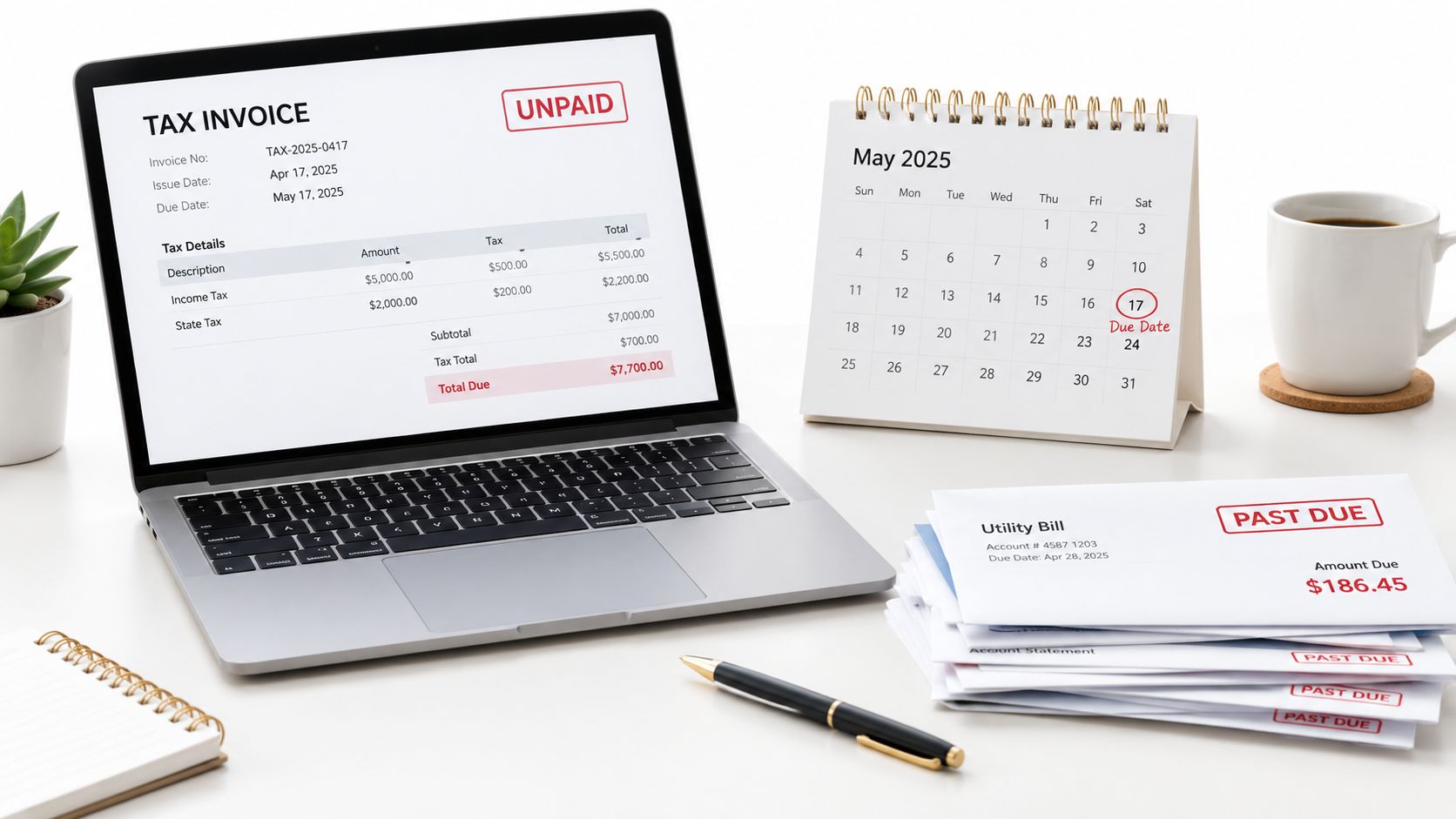
A customer pays late, a repair consumes your reserve, or a VAT bill arrives higher than forecast. You miss the HMRC deadline, and the liability starts increasing while you try to find the cash. The original tax has not changed, but the amount owed can keep rising.
Late payment interest is a separate cost for leaving tax unpaid after its due date. HMRC applies it from the first overdue day until the balance is paid in full, so every day of delay adds to the amount due. Interest can continue while you negotiate with HMRC or arrange funding. HMRC's guidance on late payment interest explains when the charge starts and ends.
The total cost matters more than the headline rate
A rate on its own does not show the financial impact. Calculate the cost of the delay against the outstanding tax, then check whether penalties apply as well. Interest and penalties are different charges. A late filing or late payment penalty may arise alongside interest, depending on the tax and the missed obligation.
For a small firm, contractor or landlord with limited cash reserves, the extra amount can reduce funds available for wages, suppliers and operating costs. Protect that cash by keeping a tax reserve, setting payment reminders and following practical cash-flow advice for businesses.
Use this rule: treat every HMRC deadline as a cash commitment, not an administrative date. If payment is at risk, confirm the balance and contact HMRC promptly. Paying sooner limits further interest. A payment arrangement may make the debt manageable, while evidence-based challenges should target charges that are demonstrably incorrect.
Current HMRC Late Payment Interest Rates
The important policy change happened on 6 April 2025. For most taxes, HMRC moved the late payment calculation from Bank of England base rate plus 2.5% to base rate plus 4.0%, an increase of 1.5 percentage points announced at Autumn Budget 2024. The change raised the cost of delaying payment even when the underlying tax liability stayed exactly the same. HMRC's official interest-rate record sets out the relevant rates and historical movements.
| Period | Rate calculation | Effective rate |
|---|---|---|
| Immediately before 6 April 2025 | Bank of England base rate plus 2.5% | 7.0% |
| From 6 April 2025, with base rate at 4.5% | Bank of England base rate plus 4.0% | 8.5% |
| From 9 January 2026, after subsequent base-rate movements | Bank of England base rate plus 4.0% | 7.75% |
Why the calculation matters
The rate isn't a fixed promise that remains unchanged forever. It follows the structure set by HMRC and can move when the Bank of England base rate changes. That means a business should check the official HMRC page rather than rely on an old calculator, a previous statement or advice written before the latest rate movement.
The 8.5% rate was the charged rate for most late-paid taxes from 6 April 2025 when the base rate stood at 4.5%. The official page records 7.75% from 9 January 2026, following subsequent base-rate movements. These aren't competing figures. They apply at different points in the rate history.
Who should pay attention
The regime affects more than one type of taxpayer. It can matter to businesses managing VAT, Corporation Tax, PAYE-related liabilities and other tax accounts, as well as individuals dealing with Income Tax Self Assessment. A missed deadline may therefore affect a company, a sole trader, a contractor or a landlord.
Check the rate that applies to each period of delay, especially if the liability has been overdue across a rate change. Don't estimate the charge from today's rate alone.
How HMRC Calculates Late Payment Interest
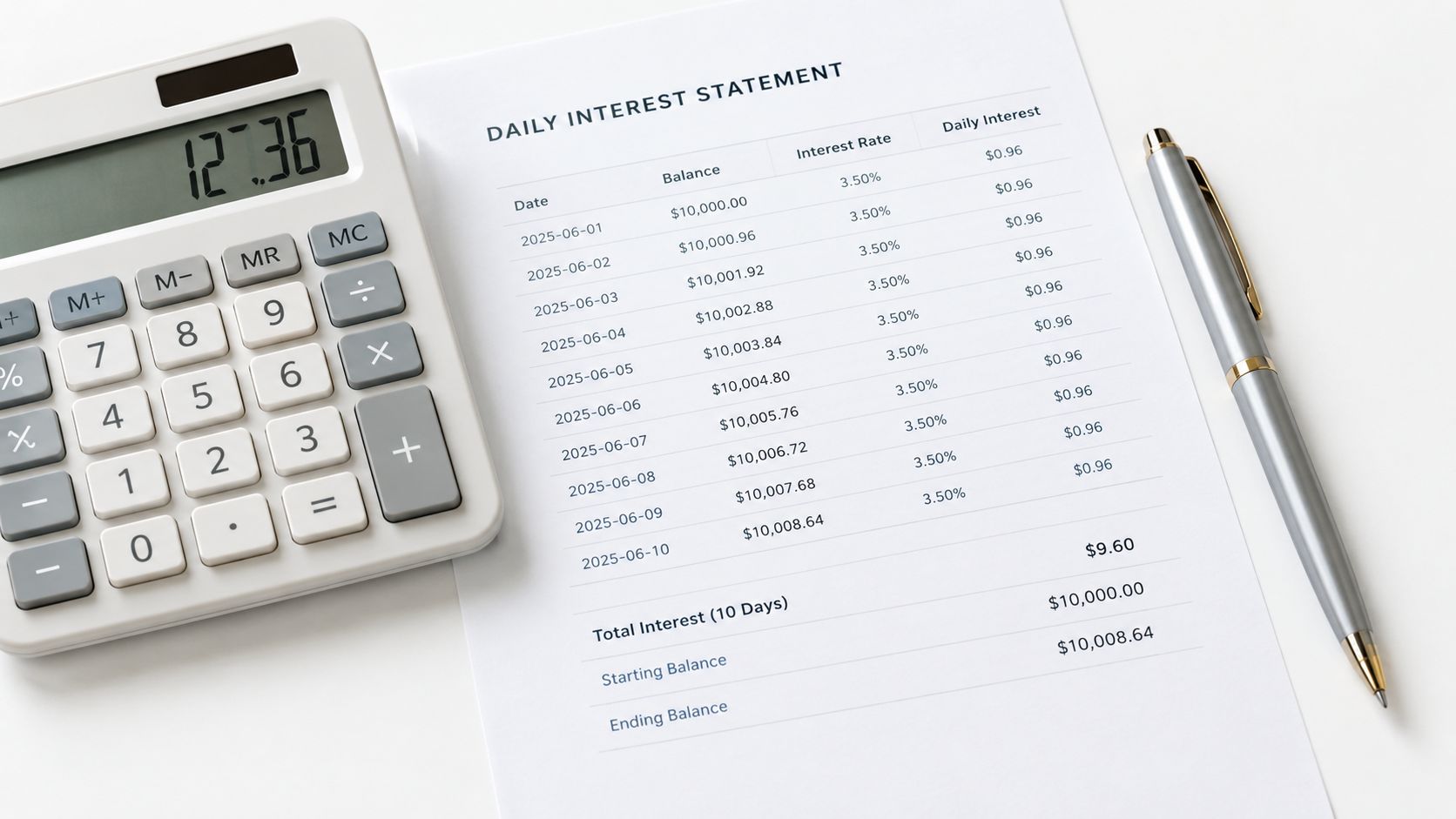
HMRC charges interest on the tax still unpaid and the number of days it remains overdue. Use this working formula:
Overdue tax × annual interest rate ÷ 365 × days overdue
For example, a £10,000 Corporation Tax liability paid 30 days late at 8.5% produces this calculation:
£10,000 × 0.085 ÷ 365 × 30 = £69.86, so plan for roughly £70.
The final HMRC figure depends on the rate and dates applying to that liability. Interest runs from the first overdue day until the tax is paid in full, as explained in HMRC's late payment guidance.
Work through the calculation
- Confirm the tax balance. Use the overdue principal shown in your records, not an estimate.
- Check the applicable rate. A debt covering different rate periods may require separate calculations.
- Count the overdue days. Use the payment deadline and payment date recorded by HMRC.
- Apply the formula. Keep the calculation with your accounting records.
- Check HMRC's statement. Investigate any difference before accepting the charge or disputing it.
What happens during a longer delay
Interest continues to build while the balance remains unpaid. A payment reduces the outstanding principal, so the daily charge should fall after HMRC applies it. Pay as much as you can without leaving the business unable to cover essential costs or another tax deadline.
The financial lesson is direct: every overdue day adds cost, and a larger unpaid balance creates a larger daily charge. Do not assume penalties and interest are interchangeable. Interest relates to the unpaid tax, while penalties follow separate rules.
For Self Assessment liabilities, include future bills in your cash-flow plan. The payments on account guidance can help you budget for those instalments and avoid creating another shortfall while clearing the current debt.
Understanding the Difference Between Interest and Penalties
Interest and penalties are not the same charge. Interest compensates HMRC for the period it has not received tax that was due. A penalty responds to a missed obligation, such as filing or paying late, under the rules applicable to that tax.
That distinction changes how you respond. Paying the tax may stop further interest on the settled amount, but it won't automatically erase a penalty already issued. Conversely, filing a return late can create a filing penalty even if the tax was paid, while paying the tax late can create interest even when the return was filed correctly.
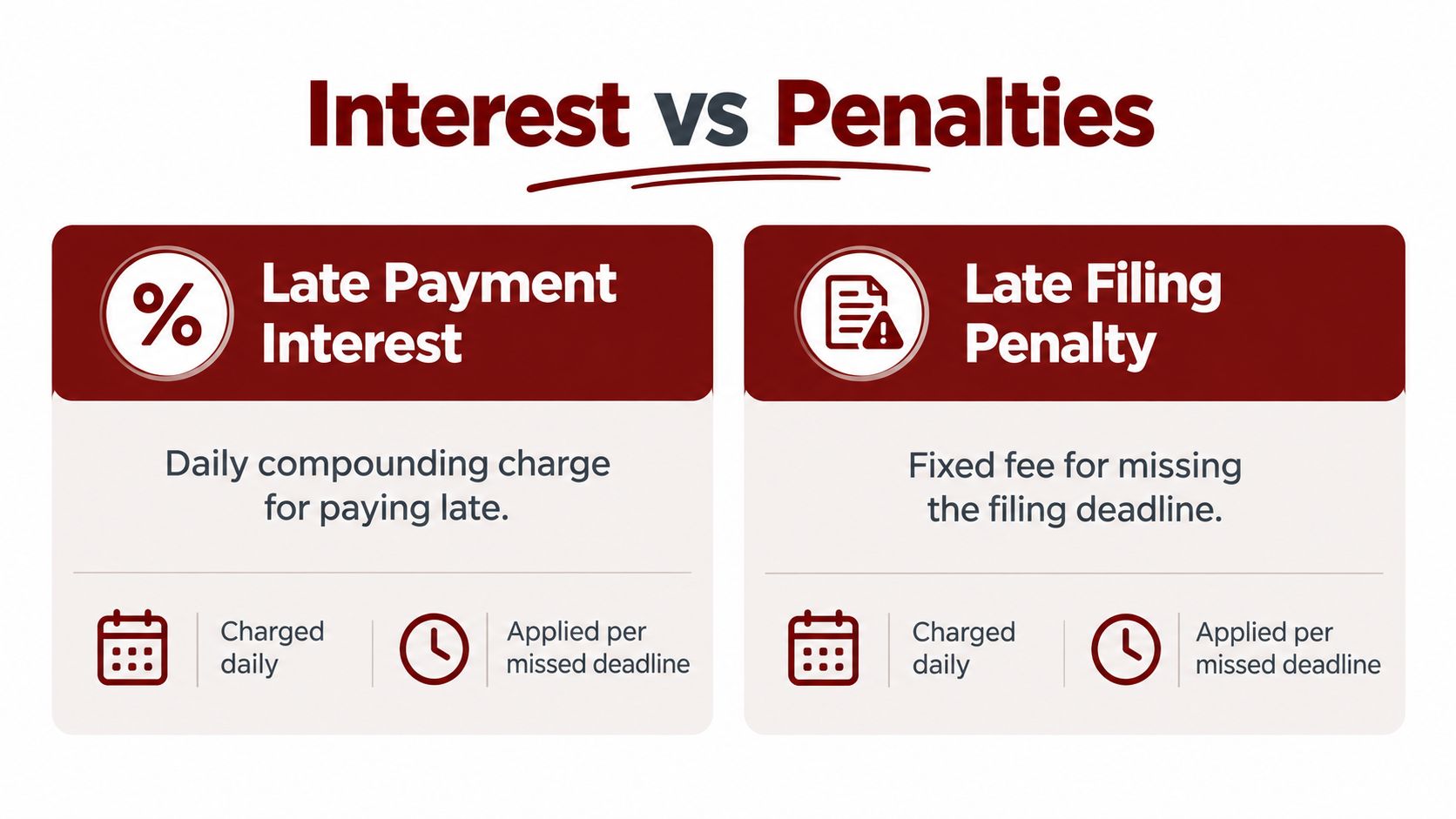
Compare the two charges
| Late payment interest | Late filing or payment penalty |
|---|---|
| Accrues while qualifying tax remains unpaid | Arises because a filing or payment obligation was missed |
| Linked to the overdue tax and applicable rate | Governed by the penalty rules for the relevant tax |
| Continues until the relevant balance is paid | May be imposed at a specified point or escalate under the applicable regime |
| Can apply even when the return was filed on time | Can apply even where the tax balance is small or already paid, depending on the rule |
HMRC's guidance states that late payment interest is charged from the first overdue day until full payment. The Institute of Chartered Accountants in England and Wales discussion highlights the combined exposure that can arise for underpaid VAT, where interest and daily penalties can operate together.
Review both sides of the account
Start with three questions:
- Was the return filed on time? If not, examine the filing penalty separately.
- Was the tax paid on time? If not, calculate the interest period separately.
- Does the notice explain each amount? If it doesn't, ask HMRC for a breakdown.
For VAT and the expansion of Making Tax Digital to Income Tax Self Assessment, this separation is particularly important. A business owner who focuses only on the interest rate may underestimate the cost of a late return or an unpaid balance.
Steps to Minimise and Challenge Interest Charges
Act in the right order. Your first objective is to stop the situation becoming less clear and more expensive.
Establish the position today
Log in to the relevant HMRC account and download the statement, notices and payment history. Match the liability to your bookkeeping records, then identify the original tax, interest, penalties and payments separately. Don't make a challenge based on a rough memory of the deadline.
If the liability is correct, pay as much as you safely can without creating a new missed payment. Then contact HMRC about the remaining balance. A Time to Pay discussion can be more constructive when you can show the amount owed, the available cash and a realistic repayment proposal.
Challenge only a specific error
An appeal needs a reason, not just a cash-flow explanation. Possible issues include an incorrect payment allocation, a wrong due date, a duplicated charge or circumstances that qualify under the relevant appeal rules. Gather bank confirmations, submission receipts, HMRC correspondence and accounting records before you contact the department.
A challenge should identify the exact charge, the reason it is wrong and the evidence that proves your position.
Interest may still apply while a dispute is considered, so ask HMRC what happens to collection activity and ongoing charges. If you can't explain the calculation yourself, use an accountant to review the account before you submit an appeal. An accountant's wider small-business support can also expose the bookkeeping or forecasting weakness that caused the missed payment.
Prevent a repeat
Set calendar alerts, keep a tax reserve and review upcoming liabilities during every management meeting. For VAT, Corporation Tax and Self Assessment, record both the filing deadline and the payment deadline. The best challenge is the one you never need to make.
Payment Methods and Timelines
Choose the payment route based on the urgency and the type of liability. Before sending money, copy the correct HMRC payment reference exactly. A payment made against the wrong reference may not clear the account you intended to settle, even if the bank confirms that the transfer left your account.
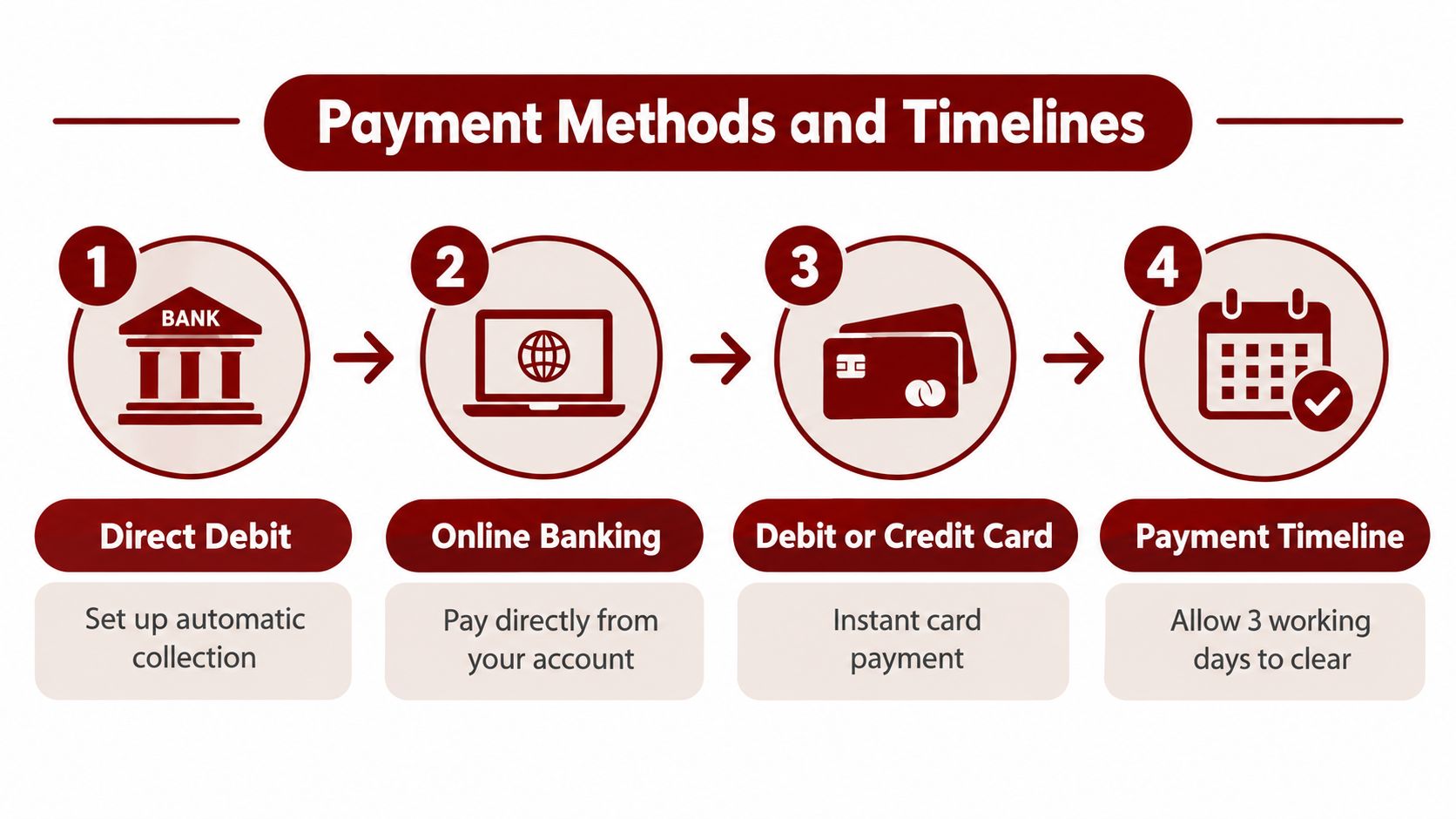
Match the method to the situation
- Direct Debit: Useful for recurring obligations where the collection mandate covers the relevant tax service. Check the collection date and keep enough money available.
- Online banking: Suitable for a controlled one-off payment, provided you use the correct reference and allow time for processing.
- Debit or credit card: Can be convenient when the facility and associated terms are suitable. Confirm the payment details before authorising it.
- Time to Pay: Appropriate when paying in full would damage essential cash flow. Contact HMRC early and propose an instalment plan based on what the business can afford.
A payment plan doesn't turn late payment into on-time payment. Interest can continue on the outstanding amount, so calculate the cost before agreeing to the schedule. Even so, a structured plan may be safer than leaving the account unattended while the balance grows.
Keep proof of every transaction
Save the confirmation screen, bank record, reference and date. Reconcile the payment to the HMRC statement and chase any mismatch promptly. If you're unsure which Self Assessment obligation you need to settle, use the UK Self Assessment deadline guidance alongside the payment information in your HMRC account.
The following video provides an additional visual explanation of payment timing and methods:
Professional Help and Support
An overdue HMRC balance is rarely just a tax problem. It can reveal weak cash-flow forecasting, incomplete bookkeeping, unclear responsibility for deadlines or a misunderstanding between filing and payment obligations. Fixing the statement without fixing the process leaves the business exposed to another avoidable charge.
A professional accountant can review the HMRC account against the ledgers, confirm the period covered by each charge and separate a valid interest calculation from a disputable penalty. They can also help prepare a Time to Pay proposal that reflects real cash flow rather than an optimistic promise the business can't keep.
What useful support looks like
Look for practical help with:
- Account review: Reconcile liabilities, payments, interest and penalties.
- Deadline control: Build a calendar covering VAT, payroll, Corporation Tax and Self Assessment.
- Cash-flow planning: Forecast tax reserves alongside wages, suppliers and other fixed commitments.
- HMRC communication: Prepare clear responses and organise supporting evidence.
- Compliance work: Keep bookkeeping, accounts and returns accurate enough to support timely payment.
Action Accountants Limited is a firm of Certified Public Accountants and management consultants based in Colindale, North West London. Led by Georgie Zdrenghea, it provides accounting, taxation and advisory support for individuals and growing businesses, including bookkeeping, payroll, VAT, personal and corporate tax returns, business formation and management consulting. Its specialist construction experience also covers CIS-related bookkeeping and tax obligations.
The sensible decision is to get help before the account becomes harder to reconcile. If the interest is correct, you need a payment plan and stronger controls. If it's wrong, you need evidence and a focused challenge. Either way, speed matters because the unpaid balance remains active until resolved.
Action Accountants Limited can review your HMRC statement, distinguish late payment interest from penalties, and help you organise payment or challenge an incorrect charge. Visit Action Accountants Limited today to discuss your overdue tax position and put a practical plan in place.