
Company Formation Charges: What UK Founders Need to Know
Understand company formation charges in the UK. Break down registration fees, agent costs, and hidden extras to budget wisely for your new business.
Since February 2026, the statutory minimum for forming a UK limited company and filing its first confirmation statement is £150. On top of that, formation agent fees can range from free to several hundred pounds, depending on whether you want a basic filing service or continuing accounting and compliance support.
That distinction matters because the price on a formation website rarely tells the whole story. A cheap incorporation may only submit your application, while an accountant-led service may also help with tax registrations, bookkeeping, payroll, statutory accounts and company secretarial work. The right choice depends on what you need after the company appears on the register, not just what you pay on day one.
Table of Contents
- Why Company Formation Charges Just Changed
- Statutory Companies House Fees Explained
- Formation Agents vs Accountants Who Charges What
- Optional Extras and Add-On Costs
- Hidden Costs and Misleading Marketing Traps
- How to Choose Your Formation Route Wisely
Why Company Formation Charges Just Changed
The most important fact for founders starting after 1 February 2026 is the change to Companies House fees. The digital incorporation charge increased from £50 to £100, while the digital confirmation statement fee increased from £34 to £50. The paper confirmation statement fee is now £110. The policy change also left paper incorporation at £124 and same-day digital incorporation at £156. The government's explanation of the 2026 Companies House fee changes sets out the revised structure.
For a founder, this is more than an administrative adjustment. It changes the minimum amount needed to establish and maintain a company through its first filing cycle. An online incorporation followed by the first confirmation statement now creates at least £150 in statutory Companies House charges, before an agent, accountant, registered office provider or legal adviser adds anything.
Practical rule: Treat the Companies House fee as the starting point, not the full formation budget.
The increase also changes how you should compare advertised packages. A provider may display only its own fee, absorb the statutory charge into a larger total, or advertise a low entry price that excludes ongoing services. Unless you identify each component, two apparently similar packages may offer very different value.
The invoice needs decoding
A formation invoice usually contains several distinct categories:
- Statutory charges: Money paid to Companies House for incorporation or later filing obligations.
- Agent charges: Payment for preparing and submitting the application, checking details and providing formation documents.
- Accounting charges: Fees for tax advice, bookkeeping, accounts preparation, payroll or ongoing compliance.
- Optional services: Registered office arrangements, service addresses, VAT assistance, company secretarial support and banking introductions.
The costly mistake is assuming that every charge relates to incorporation itself. Some services are useful from the start, but others can wait until the business has customers, employees, premises or taxable turnover. A sensible founder separates legal requirements from convenience and from advice that reduces future risk.
Statutory Companies House Fees Explained
Companies House gives founders three main incorporation routes for a private limited company in England and Wales. The standard online route costs £100 and is usually completed within 24 hours. A paper application costs £124 and normally takes 8 to 10 days, while same-day digital incorporation costs £156. These are official charges, so choosing a different agent doesn't remove them. Companies House fee guidance on incorporation routes and processing times provides the formal fee details.
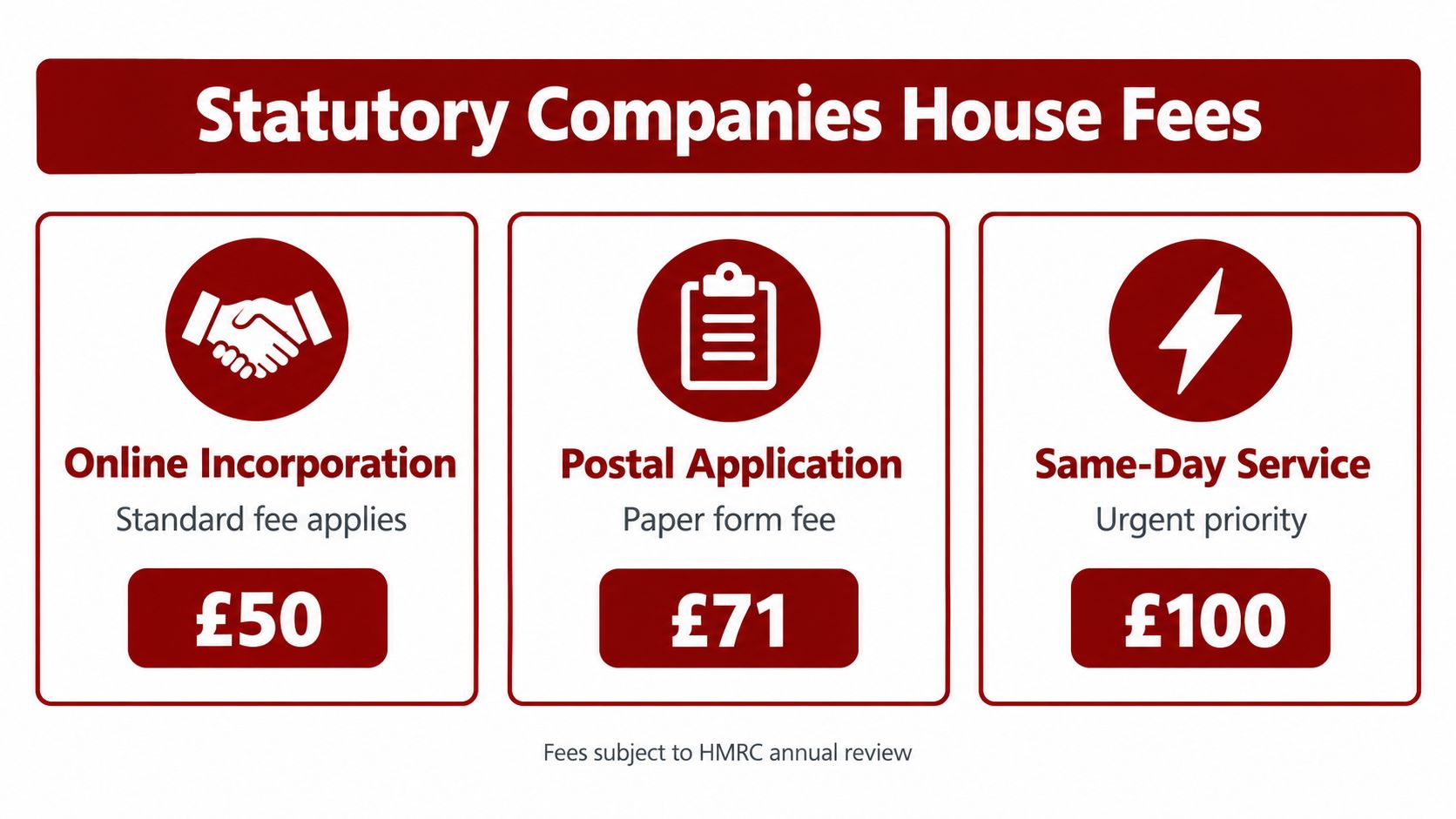
The first confirmation statement is the charge that founders often leave out of their budget. Including that later digital filing, the statutory totals are:
| Formation route | Incorporation fee | First digital confirmation statement | Statutory total |
|---|---|---|---|
| Standard online | £100 | £50 | £150 |
| Paper application | £124 | £50 | £174 |
| Same-day digital | £156 | £50 | £206 |
The totals above combine the applicable incorporation charge with the current digital confirmation statement fee described in the government fee guidance and the 2026 policy update. They exclude formation agents, accountants, registered office services and other third-party costs.
Which route suits which founder
Online incorporation is normally the sensible default when the business isn't facing a genuine deadline. It offers the lowest statutory entry charge and the standard service is usually completed within 24 hours. Paying for same-day treatment doesn't make the company more compliant. It only makes sense when a specific commercial event justifies the priority.
Paper incorporation is slower and costs more than standard online registration. It may suit a founder whose circumstances require a postal application, but it isn't the value route because it feels more formal. The extra administration doesn't replace the need to provide accurate company information.
Same-day digital incorporation is a premium for urgency. A time-sensitive contract, funding process or property transaction may justify it, but many founders buy speed before checking whether the recipient needs an incorporated company immediately.
A confirmation statement is a separate statutory obligation from annual accounts. It confirms that the company's registered information remains accurate, so founders should allow for it when setting up a cash-flow forecast. The incorporation fee gets the company onto the register. It doesn't cover the company's future filing responsibilities.
Formation Agents vs Accountants Who Charges What
A formation agent and an accountant may both help you create a company, but they solve different problems. The formation agent is usually focused on registration. The accountant is more likely to stay involved once the company starts trading and its financial obligations become more complex.
A basic agent-led service may collect director, shareholder and registered office information, check the application and submit it to Companies House. Some providers advertise incorporation at no separate agent fee or at a very low price. That can be perfectly suitable for a founder who understands the process and only wants administrative help.
The limitation is continuity. A formation-only provider may not prepare management accounts, explain Corporation Tax registration, set up payroll, review VAT obligations or prepare statutory accounts. Those tasks don't disappear when incorporation is complete.

What an accountant adds
An accountant-led setup generally costs more because it includes professional judgement rather than only form submission. The useful question isn't whether the fee is higher. It's whether the work prevents an expensive mistake or saves the founder from rebuilding the company's records later.
Look for clarity on:
- Scope: Does the service include only incorporation, or does it continue into bookkeeping, tax and accounts?
- Ownership: Will you control the accounting software and receive the records if you leave?
- Advice: Can someone explain dividends, salary, expenses and VAT in the context of your business?
- Deadlines: Does the firm monitor filing dates, or does it wait for you to send documents?
- Communication: Is support included, or billed separately whenever you ask a question?
A web-only agent works well for a straightforward company with a founder who is comfortable handling the next steps. An accountant is often the more suitable route where there are multiple shareholders, contractors, employees, property interests, overseas activity or a need for regular financial guidance.
Before committing, use a practical checklist such as how to choose an accountant. Don't compare a registration-only fee with a full compliance service and call the cheaper option better value. They aren't the same product.
Optional Extras and Add-On Costs
The statutory incorporation fee is unavoidable, but many other charges depend on your circumstances. The right approach is to classify every add-on as required, useful now or deferrable.
A registered office address is a common example. A company needs an appropriate registered office, but not every founder needs to buy a separate address service. If using a home address is acceptable and privacy isn't a concern, paying for an address service may add little practical value. If the founder works from home, moves frequently or wants to keep a private address away from the public register, the service can be worthwhile.
Test each extra against a real need
Registered office and service address services can provide privacy and mail handling. Check whether the fee covers forwarding, scanning, identity checks and renewal, rather than assuming the displayed price includes every handling charge.
Share issuance assistance may help when the ownership structure is more involved than a simple founder-owned company. If there are co-founders, investors or different share rights, get advice before submitting the application. Correcting an unsuitable structure later can be more disruptive than making the decision properly at incorporation.
Company secretarial packages can include registers, resolutions and reminders. They may be useful where directors don't have time to maintain records, but they shouldn't be purchased automatically. Understand precisely which filings and documents the package covers. A company secretary's role and responsibilities are explained in this guide to what a company secretary is.
VAT registration assistance is valuable when the business needs to register or has a complicated taxable activity. It isn't a substitute for deciding whether registration is appropriate. Ask the adviser to explain the commercial and administrative consequences rather than just to tick a box.
Banking introductions can save time, but an introduction isn't the same as approval. The bank will still carry out its own checks, and opening an account shouldn't be treated as proof that the formation provider has assessed your business model.
Good buying discipline: Ask, “What problem does this add-on solve for my company today?” If the answer is unclear, defer it and revisit the decision when the business changes.
Hidden Costs and Misleading Marketing Traps
“Free formation” can be a legitimate commercial offer, but it deserves scrutiny. The word may describe only the agent's labour while statutory charges, address services or later compliance packages remain payable. It may also be linked to a banking, software or subscription arrangement that the founder hasn't compared with standalone alternatives.
Read the pricing page and the terms together. Look for renewal wording, cancellation requirements, VAT treatment, document fees and charges for support outside the standard workflow. A low introductory price is useful only if you understand what happens when the introductory period ends.
Where founders lose control of the budget
The most common traps are predictable:
- Automatic renewals: A registered office or service address may renew unless you cancel it in time.
- Bundled subscriptions: A formation package may include software or compliance support that continues after incorporation.
- Premium contact channels: Telephone or specialist support may sit outside the advertised package.
- Document upsells: Certificates, registers and resolutions may be presented as essential even when the founder can obtain or prepare suitable documents another way.
- Unclear tax support: “HMRC registration” may mean submitting a form, not explaining the tax treatment that follows.
Don't calculate value from the first payment alone. Write down every recurring service, every renewal condition and every excluded task. Then compare the total commitment with a provider that states its ongoing responsibilities plainly.
The same discipline applies when comparing jurisdictions. If you're considering an overseas alternative, a resource such as this 2026 guide to UAE business formation can help you identify which services are bundled and which obligations sit outside the headline offer. The comparison isn't about choosing a location from a price tag. It's about understanding the full administrative model.
A confirmation statement is one of the recurring obligations founders need to plan for, rather than treating formation as a one-off event. Review what a confirmation statement is before accepting a package that claims to handle ongoing compliance.
How to Choose Your Formation Route Wisely
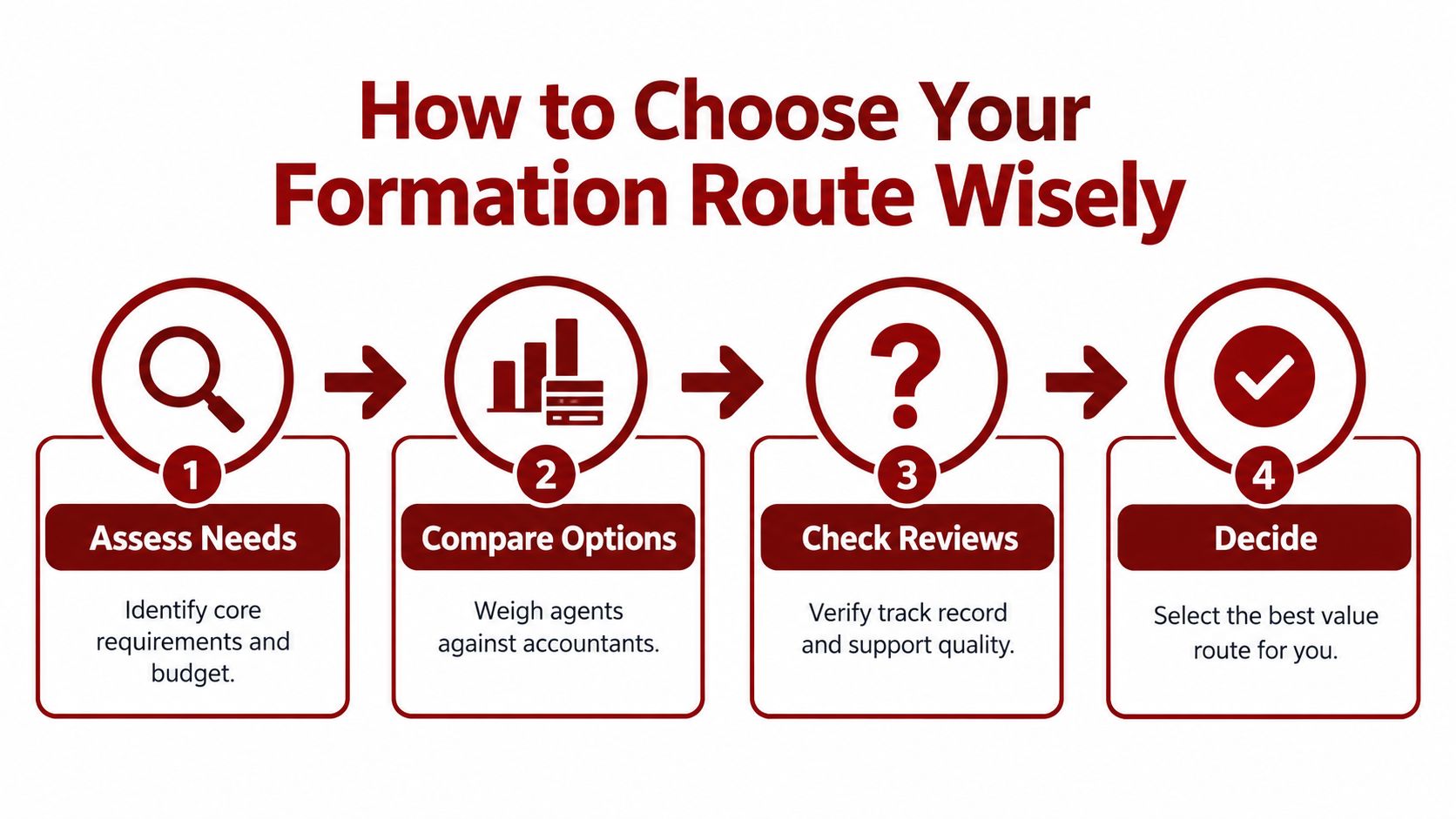
Use four questions to choose the route.
- Do you need speed? If not, standard online incorporation is the straightforward statutory option. Pay for same-day service only when the deadline is real.
- Can you manage the follow-up? If you understand tax registration, records and filing responsibilities, an agent may be enough. If not, speak to an accountant before incorporating.
- Is the structure simple? Multiple shareholders, employees, investment or sector-specific obligations justify more careful advice.
- Are the terms transparent? Reject packages that hide renewals, subscriptions or excluded support.
For a practical registration checklist, use this guide to registering a new business. Budget for the statutory charges first, then choose only the agent or accountant services that match the company's actual needs.
Action Accountants Limited supports founders with company formation, company secretarial work, bookkeeping, payroll, VAT, tax returns and statutory compliance, so you can compare company formation charges with a clear view of what happens after registration. Visit Action Accountants Limited to discuss the right level of support for your new business.