VAT on Pre Registration Expenses How to Reclaim Correctly
Learn how VAT on pre registration expenses works in the UK, time limits, eligibility and how to reclaim correctly on your first VAT return.

You've started trading, bought equipment, paid professional fees and perhaps stocked up on materials. At the time, VAT registration felt like a future problem. Now your registration is in place, and you're looking back at those invoices wondering whether the VAT has disappeared permanently.
It may not have. VAT on pre-registration expenses can provide a valuable cash-flow recovery window for contractors, consultants, startups and other growing businesses. The rules are specific, though. A cost can qualify in principle but fail because it falls outside the relevant time window, the item isn't still held by the business, or the purchase doesn't support taxable business activity.
This guide explains the rules in practical terms. You'll see how goods differ from services, which evidence to keep, how partial business use affects recovery, and how to include an eligible claim on your first VAT return. The governing framework is set out in HMRC's VAT input tax manual, and the safest approach is to treat every old invoice as a question to test, not an automatic reclaim.
Table of Contents
- Introduction Why Pre Registration VAT Matters for New Businesses
- Understanding How VAT on Pre Registration Expenses Works
- Eligibility Criteria You Must Meet to Reclaim VAT
- Time Limits Partial Exemption and Adjustments Explained
- How to Claim VAT on Pre Registration Expenses Step by Step
- Real World Examples for Contractors and Small Businesses
- Next Steps to Maximise Your VAT Recovery and Stay Compliant
Introduction Why Pre Registration VAT Matters for New Businesses
A contractor may buy tools, protective clothing and materials before larger contracts arrive. A consultancy may pay for a laptop, accountancy support and software while building its client base. A retailer may hold stock before registering for VAT. The key question is not when the invoice was paid, but whether the purchase still supports the VAT-registered business.
HMRC permits recovery of qualifying pre-registration input tax when the relevant conditions are met. This makes the period before registration a potential cash-flow recovery window, particularly for businesses that had to spend before their first substantial customer payment. The recovery is tested item by item, rather than applied to the business's early spending as a whole.
The word qualifying does the important work. Stock that remains on hand when registration takes effect may be considered differently from stock already sold before that date. A laptop used for the business may need a different analysis from software bought for private use. The purchase must fall within the applicable period and relate to the business's taxable activities.
Cash-flow perspective: Reviewing old invoices can recover eligible input tax that would otherwise be left behind. It does not turn every historic purchase into a claim, and business or private use can reduce the amount recovered.
The claim normally belongs on the first VAT return after registration. Before finalising that return, gather invoices and separate goods from services, then check the purchase date, continuing ownership or use, and connection with taxable supplies. If the first return has already been filed, do not add the amount casually to a later return. Consider whether an error correction or another compliant route is appropriate.
Partial exemption can reduce recovery where the business makes both taxable and exempt supplies. Business use can also limit the claim. For example, an item used partly outside the business may support only a proportionate recovery, even if the original invoice is otherwise within the time limit.
The practical questions are specific: which purchases count as goods, which services fall within the shorter window, and what evidence shows that an asset is used in the business? Answering those questions turns a pile of old invoices into a controlled review rather than an assumption that all VAT is reclaimable.
Understanding How VAT on Pre Registration Expenses Works
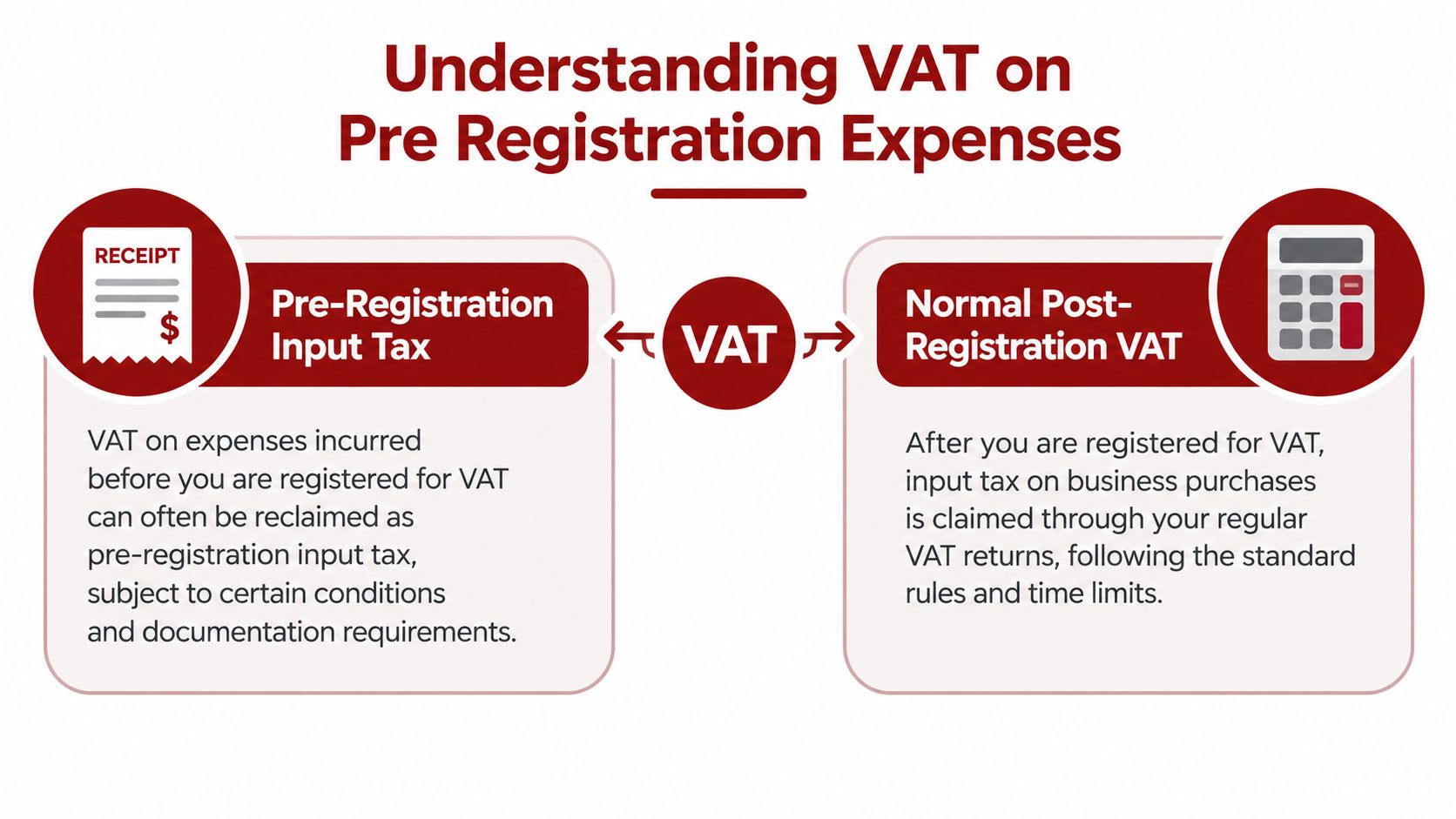
A contractor registers for VAT after buying tools, equipment and professional advice for an upcoming contract. Those earlier invoices are not automatically lost. Pre-registration input tax is a route for recovering VAT on qualifying business purchases made before registration, provided each cost meets HMRC's conditions. It works like a review window for past spending, not a general refund for everything the business has bought.
The distinction matters for cash flow. Stock may be purchased before sales begin, equipment may be needed before the first contract, and professional help may be required while the business is being formed. If the costs qualify, reclaiming their VAT can reduce the cash tied up in starting or expanding the business. Private use, exempt activities and missing evidence can reduce or remove that recovery.
Goods and services follow different clocks
Goods are physical items that can remain with the business, such as stock, tools or equipment. They may qualify when bought within the permitted period before registration, still held when registration takes effect, and used in the newly VAT-registered business. The HMRC framework allows recovery for qualifying goods bought up to four years before the VAT registration date. HMRC explains the goods conditions and time window here.
Services follow a shorter clock because they are generally consumed when supplied. Accountancy work, legal advice and marketing services do not remain as assets on a shelf. Their recovery window is six months before registration, and the service must relate to the business being carried on at registration and its taxable activities.
Use this comparison when sorting old invoices:
- Goods: confirm that the business still has the item and uses it for its newly VAT-registered activity.
- Services: confirm that the service falls within the shorter window and supports the business's current taxable activity.
- Both: connect the invoice and purchase to business spending, not private use.
The amount recovered can also be limited where an item serves both business and private purposes, or where the business makes exempt as well as taxable supplies. In those cases, only the business or taxable proportion may be recoverable. The four-year and six-month clocks identify the possible recovery period, but they do not override those use-based limits.
Eligible amounts normally go on the first VAT return after registration. Separate goods from services, test each invoice against the relevant clock, and retain evidence before completing that return. For a practical explanation of VAT payments and returns after registration, see this practical VAT payment walkthrough. A careful review can turn historic invoices into recovered cash, while keeping ineligible costs out of the claim.
Eligibility Criteria You Must Meet to Reclaim VAT
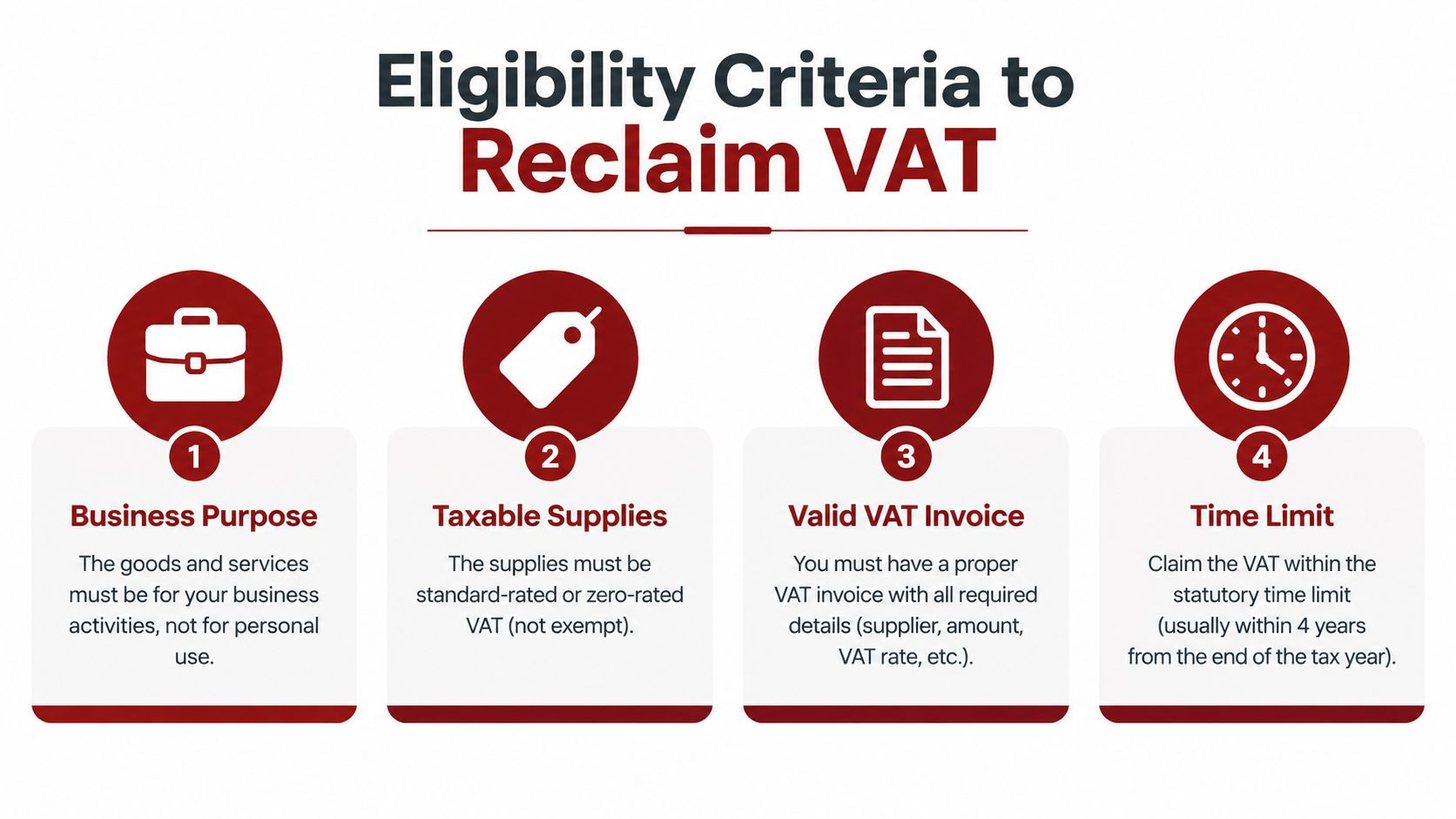
A receipt alone doesn't guarantee recovery. HMRC's approach requires you to connect the purchase to the VAT-registered business and show that the claim falls within the permitted framework. Reviewing each expense against a short set of tests will help you identify strong claims and avoid including costs that are likely to be challenged.
Test one is business purpose
Start with the reason for the purchase. A laptop bought to carry out client work has a clearer business purpose than a device bought mainly for household use. Tools purchased for construction contracts may qualify when they're retained and used by the business, while personal protective items bought for private activities won't become business costs because the owner later registers for VAT.
The invoice should identify the supplier, the purchase and the VAT charged clearly enough to support the claim. Match the document to your bookkeeping records and, where useful, retain a note explaining what the item was used for.
Test two is a link to taxable supplies
The purchase must relate to the business's taxable activities. That means you need to consider what the business supplies after registration, not just whether the purchase feels commercially sensible.
A cost supporting taxable consultancy work is different from a cost linked solely to exempt activity. If the business has mixed activities, the VAT may require apportionment rather than full recovery. This is one reason understanding the UK VAT registration threshold is only part of the planning exercise. Registration status and recovery rights are related, but they aren't the same question.
Test three is possession or continuing relevance
For goods, HMRC's condition is particularly practical. The item must still be on hand at registration and used in the newly VAT-registered business. Stock already sold, materials already incorporated into completed work, or equipment disposed of before registration needs careful review because the on-hand condition may not be met.
For services, consider whether the service was supplied within the relevant pre-registration period and whether it relates to the business at registration. A service that has no continuing connection with the business is harder to support.
Test four is evidence
Keep the VAT invoice, payment evidence and a clear business explanation. Bank records can help show that the business paid the supplier, while contracts, project records or stock lists can support the commercial purpose.
If pre-registration spending has created a cash-flow gap, funding decisions should be considered separately from VAT recovery. A guide to revenue based financing can help founders understand how revenue-linked funding differs from ordinary borrowing, but financing doesn't make an ineligible VAT claim allowable.
Time Limits Partial Exemption and Adjustments Explained
A contractor buys a van before registering for VAT, then uses it for client work and personal journeys. The purchase may pass the time test, yet the business still cannot assume that all the VAT is recoverable. The second question is how much of the cost supports taxable business activity.
The same reasoning applies to a laptop used for client assignments and private tasks, or a professional service supporting both taxable and exempt supplies. Recovery follows actual use. Private, exempt and other non-business use can reduce the amount claimed.
What you can reclaim and when
| Expense Type | Time Limit Before Registration | Key Condition | Adjustment Risk |
|---|---|---|---|
| Goods, including stock or equipment | Up to four years before registration, subject to HMRC's pre-registration input tax conditions | Still on hand at registration and used in the newly VAT-registered business | Use may be partly private, exempt or otherwise outside taxable activity |
| Services, including professional support | Up to six months before registration, subject to the relevant HMRC conditions | Supplied for the business and connected with its taxable activity at registration | The service may fall outside the window or lack a continuing business connection |
These limits create a potential cash-flow recovery window for contractors and startups. The table is a screening tool, not automatic approval. Check each invoice, confirm whether it concerns goods or services, and assess the position at the registration date.
A business that is partially exempt has another restriction to consider. Its taxable activities may support recovery, while costs connected with exempt activities may need to be excluded or apportioned. A qualifying purchase can therefore produce only partial recovery.
Why use can change the answer
The use of an asset can change after registration. Equipment might move from taxable work to private use, or an activity might become partly exempt. In those circumstances, the original recovery may need adjustment rather than remaining fixed.
Keep a simple record of business, private and exempt use. Include the invoice, the purpose of the purchase and any change in how the item is used. This gives you a clear explanation if the claim is reviewed and helps prevent a full claim where only part is supported.
If an earlier VAT return left out eligible input tax, do not enter the same amount again in a later return without checking the correction process. Review the records and use this VAT error correction guide to identify the appropriate route. Complex amounts or mixed-use costs may require professional advice.
How to Claim VAT on Pre Registration Expenses Step by Step
A good claim starts with an organised review, not with a last-minute total. Create a separate spreadsheet or bookkeeping category for pre-registration purchases and record the supplier, invoice date, description, VAT amount, goods or services classification, and intended business use.
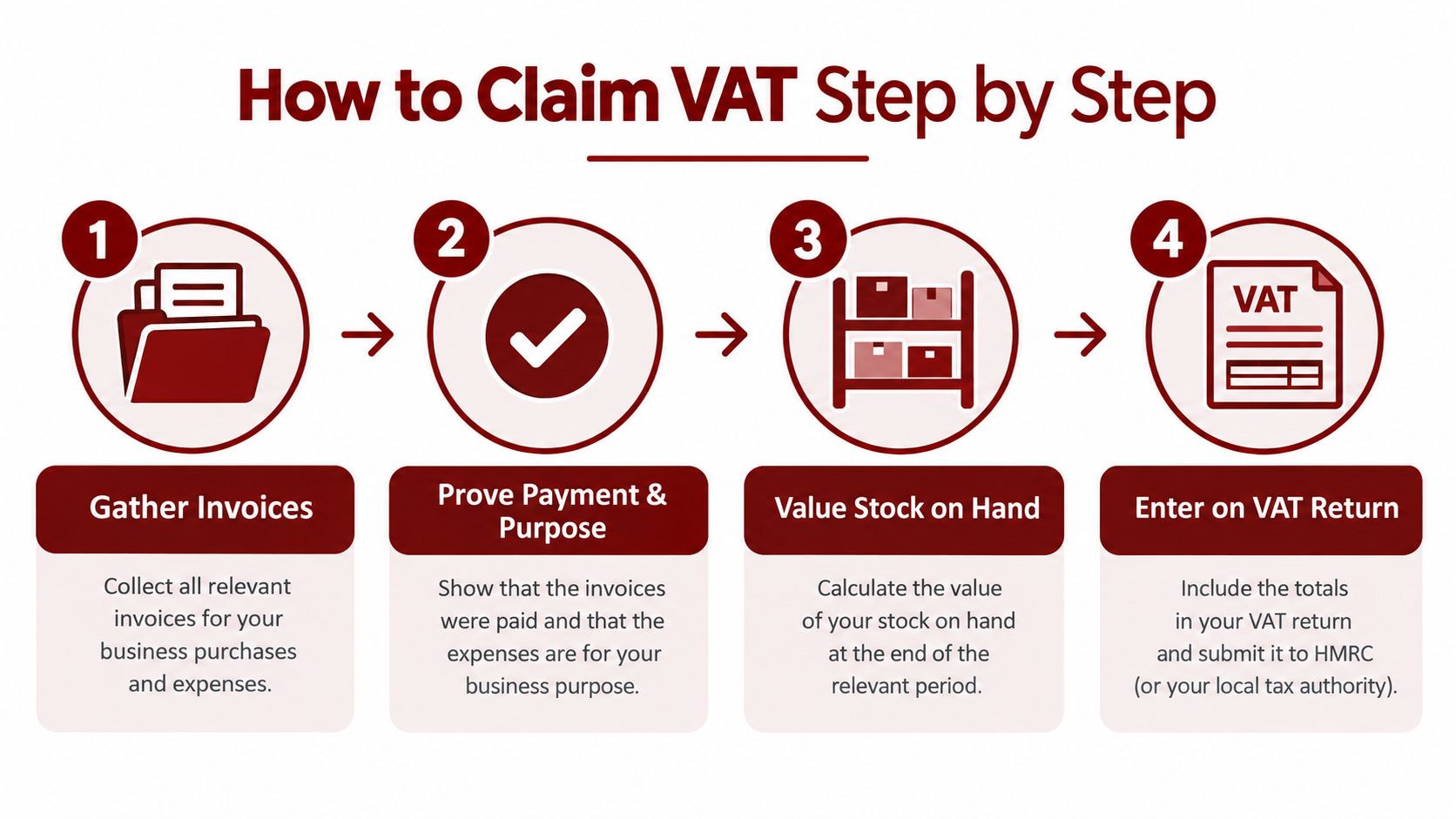
Step one is gathering the paperwork
Collect VAT invoices, receipts, supplier statements and payment records. A bank statement helps support payment, but it may not contain all the details needed to establish the VAT charged. Ask the supplier for a proper VAT invoice if the original record is incomplete, where that's possible.
Separate physical goods from services immediately. This avoids applying the longer goods window to an invoice that relates to a service.
Step two is proving the purpose
For each candidate expense, write a short explanation in plain English. “Laptop used for client reporting and project administration” is more useful than “office cost”. Link materials to the relevant trade or contract, and note whether an item is still held at the registration date.
You should also identify any private or exempt use before entering the claim. Claiming only the business-related amount is safer than claiming the full VAT and trying to explain the restriction later.
Step three is checking stock and assets
Prepare a list of goods still on hand when registration took effect. For stock, this may be a stock record. For equipment, it may be an asset register showing the item, purchase date and current business use.
Exclude goods that no longer meet the on-hand and business-use conditions. If an item has mixed use, document the basis for the restriction and keep the calculation with the invoice.
Step four is entering the claim
The eligible pre-registration input tax is normally included on the first VAT return after registration. Give the schedule to your bookkeeper or accountant before the return is prepared, rather than handing over a box of unclassified receipts.
If you're unsure whether a cost belongs in the claim, compare the evidence against the guidance and seek specialist support. A practical VAT advice resource for sole traders can provide useful background, while Action Accountants' VAT back guidance gives additional context on reclaiming eligible VAT.
If the first return has already been submitted, pause before making a duplicate claim. Check whether the omission should be corrected through the appropriate VAT error process and retain a clear audit trail.
Real World Examples for Contractors and Small Businesses
A construction subcontractor often buys equipment before VAT registration becomes necessary. The timing can create confusion because materials may be purchased in advance, used on jobs, sold on, or consumed before the registration date.

Consider a subcontractor who purchases a power tool and unused materials while preparing for taxable construction work. The tool is still owned by the business at registration and continues to support its work. The unused materials are also held by the business at registration. Those facts point towards a potentially eligible goods claim, provided the invoices, dates and business use satisfy the relevant conditions.
Now change the facts. The materials were used on a completed job before registration, or the tool was sold before registration. The business may no longer meet the requirement that qualifying goods remain on hand when registration takes effect. The invoice hasn't changed, but the facts surrounding the item have.
For construction-specific bookkeeping and compliance, including issues that can arise alongside CIS responsibilities, contractors can review accounting support for contractors and construction businesses.
A small consultancy faces a different problem. It may buy a laptop, pay for accountancy work and subscribe to software while setting up. The laptop is a good that may remain in the business, while accountancy work and software access are services that must be tested against the shorter services window and their connection with the business at registration.
A subscription period can also require care. Don't treat every historic software payment as an equipment purchase because the software is essential. Review what the invoice covers, when the service was supplied and whether it supported the taxable consultancy activity.
This video provides another visual prompt for thinking about business purchases and VAT records:
Private use can restrict recovery in either example. A laptop used for client work and personal activities, or a vehicle used for business and private journeys, needs a reasonable business-use assessment. The point isn't to reject every mixed-use cost. It's to prevent the claim from overstating the VAT connected with taxable business activity.
Next Steps to Maximise Your VAT Recovery and Stay Compliant
A strong pre-registration review is a small project with a clear output. You want a schedule of invoices that explains what each purchase was, when it was supplied, how it was used and why it qualifies.
Use this final checklist:
- Classify each cost: Separate goods from services before checking dates.
- Test the relevant window: Apply the longer goods period or shorter services period, as appropriate, using the HMRC framework.
- Confirm business use: Remove private elements and consider whether exempt activities require restriction.
- Check what remains: Confirm that qualifying goods are still on hand at registration.
- Preserve evidence: Keep VAT invoices, payment records, stock details and business-purpose notes together.
- Prepare early: Give the schedule to whoever prepares the first VAT return.
- Review omissions: If the first return has passed, use the correct correction process rather than inserting an unsupported amount later.
Pre-registration VAT recovery is best viewed as a cash-flow opportunity with compliance conditions. The rules can help a new business recover VAT on qualifying setup costs, but the claim depends on disciplined records and an honest assessment of use. Partial exemption, mixed-use assets and construction-related purchases deserve particular care because the answer may not be all or nothing.
Action Accountants Limited can review your pre-registration invoices, separate goods from services, assess business and taxable use, and prepare the supporting schedule for your VAT return. Visit Action Accountants Limited to discuss a VAT review and reduce the risk of leaving an eligible claim behind.